Distribuidora Token ACCIÓN
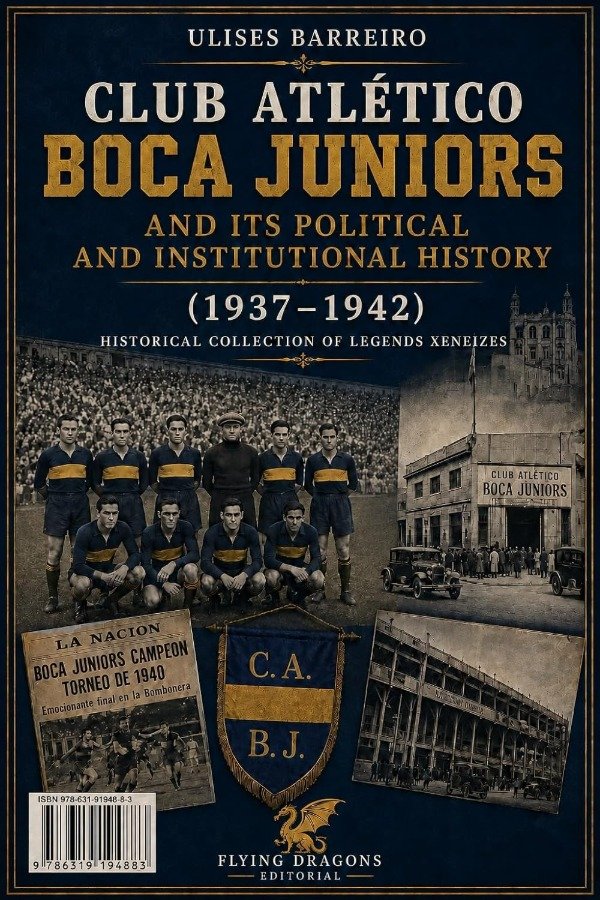
Political and Institutional History of Club Atlético Boca Juniors (1937–1942) uncovers the lesser-known story behind one of South America’s most influential sporting institutions during a decisive period in Argentina’s history.
Beyond the goals, championships, and legendary players, this book takes the reader inside the political and institutional life of Boca Juniors. Through an extensive reconstruction of the Club’s Boards of Directors, subcommittees, elections, institutional decisions, and leadership networks, it explores the men who shaped the Club during the years 1937–1942.
Drawing on documentary research and historical sources, the book examines the connections between Boca Juniors and the political, social, military, and economic elites of Argentina during a period of profound transformation. It explores how different groups and individuals competed for influence, formed alliances, occupied positions of authority, and contributed to the institutional development of the Club.
The construction of the iconic stadium that would become La Bombonera provides a central thread throughout this historical process, revealing how sporting ambitions intersected with political relationships, financial institutions, public authorities, and private interests.
This volume offers a different way of understanding Boca Juniors: not only as a football club, but as a major social and cultural institution deeply connected to the history of Argentina.
For football historians, researchers, Boca Juniors supporters, and readers interested in Argentine political and social history, this book opens a window onto the people, networks, decisions, and power structures that helped shape the modern identity of Boca Juniors.
$5.000,00
$4.900,00
2% OFF
Political and Institutional History of Club Atlético Boca Juniors (1937–1942) uncovers the lesser-known story behind one of South America’s most influential sporting institutions during a decisive period in Argentina’s history.
Beyond the goals, championships, and legendary players, this book takes the reader inside the political and institutional life of Boca Juniors. Through an extensive reconstruction of the Club’s Boards of Directors, subcommittees, elections, institutional decisions, and leadership networks, it explores the men who shaped the Club during the years 1937–1942.
Drawing on documentary research and historical sources, the book examines the connections between Boca Juniors and the political, social, military, and economic elites of Argentina during a period of profound transformation. It explores how different groups and individuals competed for influence, formed alliances, occupied positions of authority, and contributed to the institutional development of the Club.
The construction of the iconic stadium that would become La Bombonera provides a central thread throughout this historical process, revealing how sporting ambitions intersected with political relationships, financial institutions, public authorities, and private interests.
This volume offers a different way of understanding Boca Juniors: not only as a football club, but as a major social and cultural institution deeply connected to the history of Argentina.
For football historians, researchers, Boca Juniors supporters, and readers interested in Argentine political and social history, this book opens a window onto the people, networks, decisions, and power structures that helped shape the modern identity of Boca Juniors.